
I’m tired of seeing people spend hundreds of dollars on “smart” mattresses and overpriced weighted blankets just to solve a problem that isn’t actually that complicated. Most of the advice you find online about how to sleep better feels like it was written by someone trying to sell you a subscription service rather than someone who actually knows what it’s like to stare at a ceiling at 3:00 AM. We’ve turned rest into this high-tech optimization project, adding layers of digital complexity when all we really need is to simplify the system.
I’m not here to pitch you a gadget or a ten-step morning ritual that requires more effort than it’s worth. Instead, I’m going to give you the straightforward, mechanical fixes I’ve used to get my own head right after a long day of troubleshooting client systems. We’re going to focus on the physical reality of your environment and your habits—cutting out the noise and focusing on the few, high-impact changes that actually work when you finally flip the light switch.
Table of Contents
Mastering Circadian Rhythm Regulation Without the Complex Gadgets

Look, you don’t need a $300 smart ring or a subscription-based app to tell you that you’re tired. Most of these gadgets just add more digital noise to a problem that’s fundamentally biological. If you want to get serious about circadian rhythm regulation, you have to stop treating your body like a machine you can just program with an algorithm. It’s about physics and light, plain and simple.
Start with the sun. I spent years trying to “optimize” my sleep with fancy supplements, but nothing worked until I started getting actual sunlight in my eyes within thirty minutes of waking up. It sounds primitive because it is, but that’s how you signal to your brain that the day has started. This is one of the most effective natural sleep aids there is, and it doesn’t require a battery charge.
At night, the goal is the opposite: minimize the blue light interference. Instead of buying expensive blackout curtains right away, just try a simple rule—dim the overhead lights an hour before you want to crash. By lowering the light levels, you’re assisting your body’s natural melatonin production tips rather than fighting against it. Keep it low-tech and consistent.
Reducing Sleep Latency Through Simple Low Effort Habits

Look, I’m not going to tell you to buy a $300 smart mattress or download some app that tracks your REM cycles. Most of that tech just creates more data for you to stress over. If you want to focus on reducing sleep latency, you need to stop fighting your own biology and start simplifying your pre-sleep routine. The goal isn’t to perform a ritual; it’s to signal to your nervous system that the workday is officially over.
Start by treating your bedroom like a sanctuary, not a second office. This means a strict “no screens” rule within thirty minutes of hitting the pillow. The blue light from your phone is a direct hit to your melatonin production, tricking your brain into thinking it’s mid-afternoon. Instead of scrolling, try something analog. Grab a physical book or even just sit in the dark for ten minutes. It sounds tedious, but lowering the sensory input is the fastest way to bridge the gap between a racing mind and actual rest. Keep it simple, keep it consistent, and let the biology do the heavy lifting.
Cut the Noise: 5 Practical Ways to Fix Your Sleep Environment
- Stop treating your bedroom like a secondary office. If you’re working from your desk or scrolling through emails in bed, your brain never learns that the mattress is for sleeping. Keep the laptop out of the room entirely.
- Invest in a heavy-duty blackout curtain instead of a fancy sleep mask. If you can see your watch face in the middle of the night, your room isn’t dark enough. Light is the enemy of deep rest.
- Ditch the white noise machines that sound like a jet engine. If you need background sound, use a simple, steady fan. It provides a consistent, low-frequency hum that masks sudden noises without sounding artificial.
- Get your temperature under control. You don’t need a high-tech smart mattress; just crack a window or turn the thermostat down a couple of degrees. Your body needs to drop its core temperature to actually drift off.
- Audit your “sleep triggers.” If you drink coffee at 4:00 PM, you’re sabotaging yourself. Stick to a strict caffeine cutoff in the early afternoon so it’s out of your system by the time you hit the pillow.
Bottom Line: Keep It Simple
Stop looking for a magic app or a $300 smart ring to fix your sleep; focus on consistent light exposure and a predictable routine instead.
Treat your bedroom like a recovery zone, not a second office or a cinema—keep the tech out and the temperature low.
If a sleep habit feels like a chore, you won’t stick to it. Aim for small, low-friction changes that actually fit into your real life.
Cutting Through the Noise
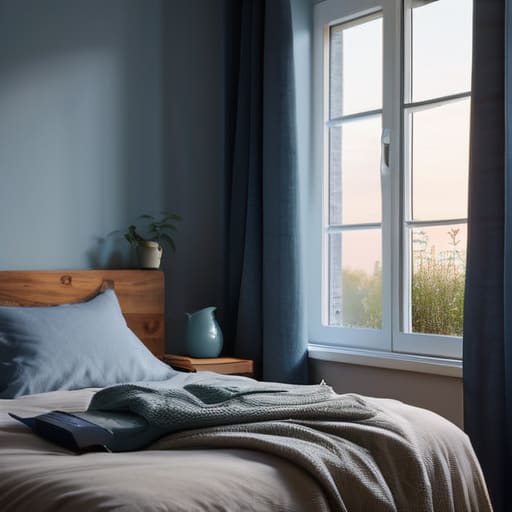
Look, we’ve covered a lot of ground, and I want to make sure you don’t get lost in the weeds. You don’t need a $500 smart mattress or a dozen different apps tracking your REM cycles to get decent rest. It really comes down to the basics: respect your internal clock, get some natural light in your eyes during the day, and stop treating your bedroom like a second office. If you can manage your light exposure and keep your pre-sleep routine dead simple, you’ve already won half the battle. The goal isn’t perfection; it’s about building a reliable system that works even when life gets messy.
At the end of the day, sleep isn’t another task on your to-do list to be optimized or “hacked” into submission. It’s a biological necessity that requires you to occasionally step away from the digital grind and just exist. Stop searching for the magic pill or the perfect gadget and start focusing on the foundational habits that actually move the needle. When you stop overcomplicating the process, you give your body the space it needs to do what it was designed to do. Now, put the phone down, dim the lights, and just let yourself rest.