I spent most of my twenties staring at code and managing digital workflows, but there’s a specific kind of mental fog that only clears when you’re actually working with your hands. Most people think they need a massive workshop and a mountain of expensive power tools to get started, but that’s just more noise. The truth is, getting bogged down in overly complex tutorials is the fastest way to lose interest before you even make your first cut. If you’re looking for beginner woodworking projects that actually provide a sense of accomplishment without turning your garage into a chaotic construction zone, you’ve come to the right place. We need to stop overcomplicating the process and start focusing on functional builds that serve a real purpose in your home.
In this guide, I’ve stripped away the fluff to bring you six straightforward projects designed to build your confidence and your toolkit simultaneously. I’m not talking about decorative trinkets that collect dust; I’m talking about sturdy, useful items that bridge the gap between digital burnout and physical reality. By the time you finish this list, you’ll have the foundational skills to stop consuming content and start creating something tangible.
Table of Contents
The Simple Workbench
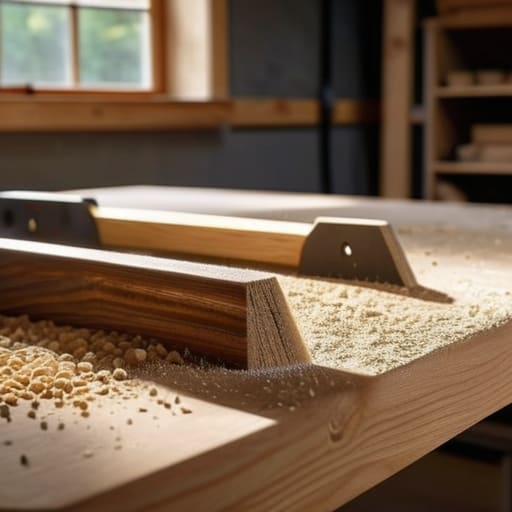
You can’t build anything worth keeping if you’re working off a kitchen table that costs more than your first car. My first real project wasn’t some fancy cabinet; it was a heavy-duty, no-frills workbench made from standard 2x4s and plywood. It doesn’t need to be pretty, it just needs to be dead stable and heavy enough that it won’t slide across the garage when you’re sawing through a piece of oak.
Minimalist Floating Shelves
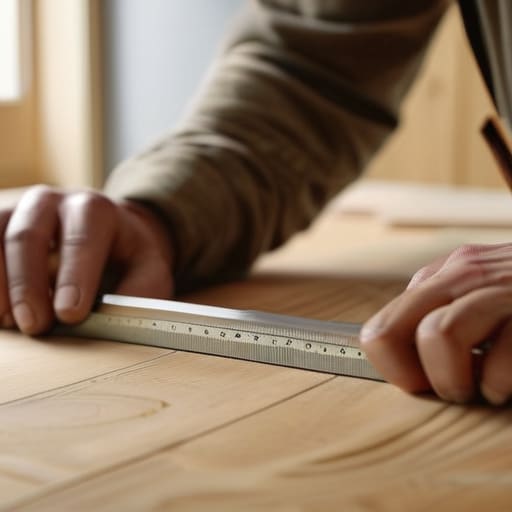
We spend too much time staring at digital clutter, so I like to use woodworking to create some actual visual breathing room. Floating shelves are the perfect entry point because they teach you the fundamentals of measuring and leveling without requiring a massive workshop. You aren’t just slapping wood on a wall; you’re learning how to account for gravity and structural integrity.
The Classic Cutting Board
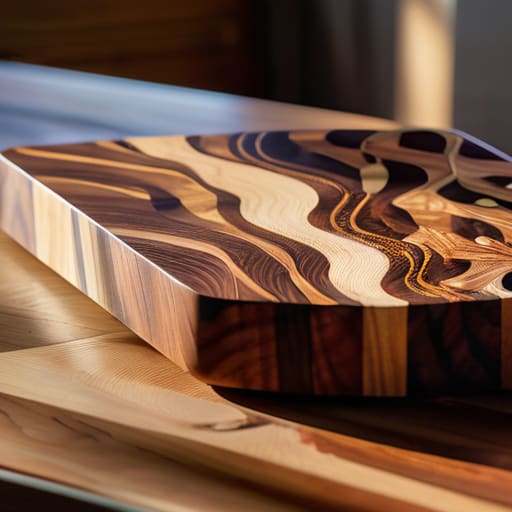
This is the ultimate test of your sanding and finishing skills. A cutting board seems easy on paper, but if you don’t respect the grain, you’ll end up with a warped piece of wood that’s useless in a kitchen. I like to use hardwoods like walnut or maple because they are durable and food-safe, providing a real lesson in how different species react to moisture and tension.
A Sturdy Step Stool
Most people think they need a massive shop to build furniture, but a simple step stool is a masterclass in structural geometry. You’re dealing with angles, weight distribution, and the necessity of making sure nothing wobbles when a person actually puts their weight on it. It’s a small-scale version of building a chair, but with much lower stakes if you make a mistake.
Desktop Organizer
Since I spend half my life managing digital workflows, I know how much a messy desk can mess with your head. Building your own desktop organizer allows you to customize the dimensions to fit your specific gear—your phone, your pens, or even that vintage synth component you’re repairing. It’s about optimizing your physical space to match your mental needs.
The Rustic Birdhouse
If you want to test your skills outside the confines of your garage, go build something for the backyard. A birdhouse is a great way to practice basic cuts and assembly without the pressure of creating something “perfect” for your living room. It’s a low-cost way to experiment with different types of cedar or redwood that can withstand the elements.
Cut Through the Noise and Get to Work
Stop hunting for the “perfect” tool or the most advanced tutorial; pick a simple project, grab the basics, and start making sawdust.
Focus on the connection between your hands and the material, not on making something that looks like a Pinterest board.
Real skill isn’t built by watching videos, it’s built by fixing the mistakes you make while actually building something.
Get to Work
Look, you don’t need a shop full of expensive, specialized machinery to start making things that matter. Whether you’re building a simple workbench to hold your tools or a basic bookshelf to organize your space, the goal is the same: move from theory to execution. We’ve covered everything from basic joinery to simple sanding techniques, and the common thread is that complexity is the enemy of progress. Don’t get bogged down in the minutiae of perfect finishes or high-end hardwoods right out of the gate. Focus on the fundamentals, get your measurements right, and most importantly, build something functional that serves a purpose in your actual, daily life.
At the end of the day, woodworking isn’t about achieving some unattainable standard of perfection you see on social media; it’s about the quiet satisfaction of looking at a piece of furniture and knowing you made it. There is a specific kind of mental clarity that comes from working with your hands, something no digital productivity app can ever replicate. So, stop overthinking the blueprints, clear some space on the floor, and just start making sawdust. The real learning happens when the saw hits the wood and you’re forced to solve problems in real-time. Go ahead—get in the shop and see what you can do.