
I spent three hours last Tuesday hunched over a vintage Moog synthesizer, trying to solder a finicky connection, only to realize my neck felt like it had been replaced by a rusted hinge. It’s a familiar, grinding ache that hits most of us right when we’re deep in the zone. Most of the “experts” online will tell you that you need a thousand-dollar ergonomic chair or a subscription to a meditation app to fix it, but let’s be real: those are just expensive Band-Aids. If you’re looking for a magic pill for how to improve your posture, you’re going to be disappointed because the truth is much more mechanical than that.
I’m not here to sell you on fancy gadgets or complicated yoga flows that take forty minutes to complete. My approach is rooted in systems engineering: we find the point of failure, adjust the setup, and simplify the solution. In this post, I’m going to show you a few straightforward, physical adjustments you can make to your workspace and your daily habits that actually stick. We’re going to cut through the wellness industry noise and focus on what works when you’re actually sitting in the chair.
Table of Contents
Fixing Your Ergonomic Desk Setup Without the Fluff

Look, you don’t need to drop two grand on a high-tech “smart chair” that promises to fix your life. Most of that stuff is just marketing fluff designed to drain your bank account. If you want a functional ergonomic desk setup, start with the basics: your eyes and your elbows. If your monitor is sitting low on your desk, you’re going to end up hunched over like a question mark by noon. Grab a couple of sturdy books and prop that screen up until the top third of the monitor is at eye level. It’s a zero-cost fix that immediately stops the downward slide into a permanent slouch.
Next, check your arm position. Your elbows should rest at a 90-degree angle, not reaching forward toward the keyboard. When you’re constantly reaching, you’re essentially forcing your body into a state of tension that makes correcting rounded shoulders nearly impossible later in the day. Keep your peripherals close. If you have to lean in to see or type, your setup is working against you, not for you. Keep it simple, keep it aligned, and stop overcomplicating the physics of sitting.
Correcting Rounded Shoulders for the Real World

Most people think correcting rounded shoulders requires a gym membership and a fancy yoga mat, but it’s usually just a matter of fighting the gravity of your own habits. When you spend eight hours a day leaning into a laptop, your chest muscles tighten up and your upper back muscles essentially go on strike. You aren’t just “slouching”; you’re physically training your body to collapse inward. To counter this, you don’t need a complex regimen of posture correction exercises. Instead, focus on simple doorframe stretches to open up that chest cavity and pull your shoulder blades back where they belong.
It’s also about the foundation. You can’t fix your upper body if your base is unstable. I’ve found that strengthening core muscles for posture is the real secret to staying upright without feeling like you’re straining. If your midsection is weak, your spine will naturally seek the path of least resistance—which is usually a curve. Think of your core as the stabilizer for the entire system. Keep it engaged, even slightly, and you’ll find that keeping your shoulders back becomes a natural reflex rather than a constant, exhausting chore.
Five Ways to Stop Slumping Without Buying a Single Gadget
- Stop looking down at your phone like it’s a sacred text. Bring the device up to eye level instead of dropping your chin to your chest. It’s a small adjustment, but it saves your neck from a world of hurt.
- Set a literal timer to move. Every 45 minutes, stand up and walk for two minutes. Your body wasn’t designed to be a static component in a workstation; it needs movement to keep the joints from seizing up.
- Use the “wall test” once a day. Stand with your heels, glutes, shoulders, and head against a flat wall for sixty seconds. It’s a quick way to recalibrate what “straight” actually feels like when you’ve been hunched over a keyboard all day.
- Strengthen your posterior chain. You don’t need a gym membership; just do some basic rows or glute bridges. If your back muscles are too weak to hold you up, no amount of expensive ergonomic chairs will fix the problem.
- Check your footwear. If you’re spending all day in heavy, unsupportive boots or flat sneakers with zero arch support, your alignment starts at the ground up. Get some decent insoles if you have to, but stop letting your feet dictate a bad spine.
The Bottom Line: Stop Fighting Your Body
Ditch the expensive ergonomic gadgets that promise miracles; start by adjusting your existing gear—monitor height, chair depth, and keyboard position—to match your natural alignment.
Movement is the only real cure for a static desk job, so stop trying to “hold” perfect posture and start incorporating micro-breaks to reset your spine every thirty minutes.
Focus on strengthening your posterior chain—the muscles in your back and glutes—to provide the physical foundation that keeps you upright without constant mental effort.
Getting It Done
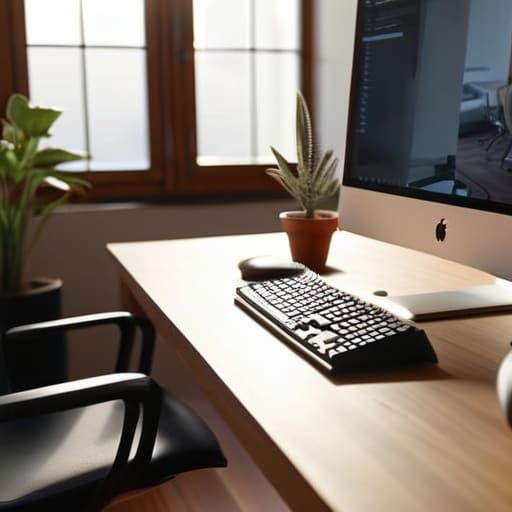
Look, we’ve covered a lot of ground here, but let’s strip it back to the basics. You don’t need a thousand-dollar ergonomic chair or a subscription to a meditation app to stop feeling like a human pretzel. It comes down to the fundamentals: getting your monitor at eye level, pulling those shoulders back, and actually moving your body instead of staying glued to your seat for eight hours straight. If your setup is fighting your anatomy, you’re just fighting a losing battle. Focus on the small, mechanical adjustments to your environment first, because once the external friction is gone, the internal work becomes a whole lot easier to manage.
At the end of the day, your body is the most complex system you’ll ever manage, and it doesn’t come with a software update to fix a decade of bad habits. You aren’t going to wake up tomorrow with perfect alignment just because you read this, but you can decide to stop making things harder on yourself. Don’t aim for perfection; just aim for better systems. Treat your physical health like a project that requires consistent, incremental maintenance rather than a one-time fix. Start small, stay steady, and eventually, you’ll realize that feeling good isn’t some luxury—it’s just the result of working smarter, not harder.