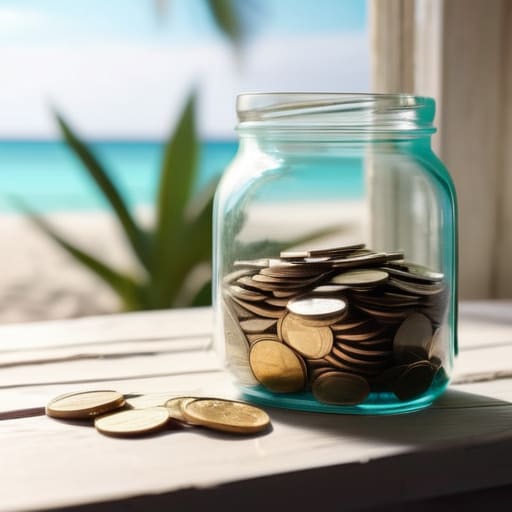
I was sitting at my workbench last Tuesday, surrounded by the smell of solder and old capacitors from a 1970s Moog I was trying to bring back to life, when I realized I was doing exactly what I tell everyone else not to do. I was obsessing over a complex, color-coded spreadsheet to figure out how to save for a vacation to the Pacific Northwest, trying to account for every single cent like it was a high-stakes engineering project. It was exhausting, completely unnecessary, and frankly, it was killing the excitement of the trip before I’d even booked a flight. Most “financial gurus” want you to treat your life like a math problem that needs solving with more data, but all that extra complexity just creates friction.
I’m not here to give you a hundred-step system or a list of things you can’t buy. I’ve spent my career stripping away the fluff in complex systems, and I’m applying that same logic to your wallet. I’m going to show you how to build a frictionless saving method that works in the background of your life, so you can stop staring at your bank balance and start focusing on the actual destination. No spreadsheets, no deprivation, just straightforward tactics that actually stick.
Table of Contents
How to Create a Travel Budget That Actually Works

Look, most people approach how to create a travel budget by opening a massive spreadsheet and trying to predict the price of a croissant in Rome three months from now. That’s a fool’s errand. You’ll spend more time tweaking cells than actually enjoying your life. Instead, I treat a travel budget like a systems engineering project: define your fixed costs first—flights, lodging, and transport—then build a buffer for the variables. If you don’t account for the “oops” moments, like a missed train or an overpriced taxi, your whole plan will crash when you hit reality.
Once you have your target number, stop manually moving money around. That’s just more friction. The most efficient way to handle budgeting for travel expenses is to automate the process. Set up a dedicated high-yield savings account for travel and program your bank to sweep a specific amount into it every payday. If you treat it like a non-negotiable utility bill, you won’t even miss the money. It’s about building a system that works in the background so you can focus on the actual trip.
Reducing Daily Expenses for Travel Funds Without the Stress

Look, I’m not going to tell you to stop buying coffee or live on ramen for six months. That’s a recipe for burnout, and frankly, it’s inefficient. If you want to see results, you need to look at the “leaks” in your system—those recurring, mindless costs that drain your accounts before you even realize they’re gone. I’m talking about the three streaming services you haven’t watched since 2022 or that premium app subscription you “forgot” to cancel. When you start reducing daily expenses for travel funds by cutting these digital ghosts, you aren’t losing quality of life; you’re just reclaiming wasted capital.
Once you’ve plugged those leaks, stop trying to manually move money around. It’s a chore, and humans are wired to procrastinate on chores. Instead, use some basic automation. Set up a recurring transfer to a high-yield savings account for travel the same day your paycheck hits. If the money moves before you have a chance to see it in your checking account, it effectively doesn’t exist. It’s a simple bit of systems engineering for your personal finances: automate the friction away so you can focus on the destination rather than the math.
Five Straightforward Ways to Build Your Travel Fund
- Automate the boring stuff. Don’t rely on willpower; set up a recurring transfer from your checking to a dedicated high-yield savings account the day after payday. If you never see the money in your main account, you won’t miss it.
- Audit your digital subscriptions. I see this all the time—people paying for three different streaming services and a premium app they haven’t opened in six months. Kill the clutter, redirect those small monthly leaks straight into your vacation fund.
- Use the “One-In, One-Out” rule for gear. Before you buy a new gadget or a piece of clothing, sell something old on a marketplace. It keeps your physical space clean and puts actual cash toward your plane ticket.
- Stop “lifestyle creeping” your small wins. When you get a tax refund or a small bonus at work, don’t treat it as permission to upgrade your lifestyle. Treat it as a direct deposit for your trip.
- Cash-only for “fun” spending. When you’re out on a weekend, pull a set amount of cash from the ATM. When the bills are gone, the spending stops. It’s a low-tech solution to a high-tech problem: digital spending feels invisible until your balance hits zero.
The Bottom Line for Your Trip
Automate the process. Don’t rely on willpower to move money; set up a recurring transfer to a dedicated travel account the day you get paid and forget it exists.
Focus on the big wins, not the pennies. Cutting out a daily latte won’t get you to Europe, but renegotiating a subscription or trimming a major monthly bill will.
Build a buffer, not just a budget. Always add a 10-15% “sanity margin” to your total goal to cover the unexpected costs that always pop up when you’re actually on the ground.
Stop Planning, Start Doing

At the end of the day, saving for a trip isn’t about mastering complex financial software or living a life of total deprivation. It’s about building a simple, reliable system that works in the background so you don’t have to think about it. We’ve covered how to build a budget that reflects your actual spending habits and how to trim the daily fat without feeling like you’re punishing yourself. If you can automate your transfers and keep your eyes on the target, you’ve already won the hardest part of the battle. Don’t let the math paralyze you; just set the system in motion and let it run.
Look, I spend a lot of my time fixing broken systems, whether it’s a piece of vintage gear or a messy project workflow. The biggest mistake I see is people waiting for the “perfect” moment or the “perfect” amount of money before they actually commit to a goal. The truth is, the best time to start building your travel fund was yesterday, but the second best time is right now. Stop overthinking the spreadsheets and start focusing on the destination. You deserve to disconnect from the screen and experience something real, so go out there and make it happen.