
I’m tired of seeing people spend fifty bucks on “nootropic” brain supplements or fancy electrolyte powders just to survive the workday. Honestly, most of that stuff is just expensive way to mask a broken system. If you’re staring at your monitor at 3:00 PM, feeling your brain turn into lukewarm sludge, you don’t need a subscription-based wellness hack; you need to understand how to beat afternoon fatigue by looking at your actual physical environment. I’ve spent years troubleshooting complex systems, whether it’s a server rack or a vintage synth, and I can tell you that when a machine stalls, you don’t just throw more fuel at it—you fix the underlying friction.
I’m not here to sell you a lifestyle overhaul or a complicated ten-step morning routine that takes more effort than the job itself. My goal is simple: I want to give you a few straightforward, manual resets that bridge the gap between your digital grind and your physical reality. We’re going to skip the fluff and focus on the high-leverage moves—the kind of practical, no-nonsense adjustments to light, movement, and hydration that actually work when the screen goes dark and the energy hits zero.
Table of Contents
Unmasking the Post Lunch Dip Causes
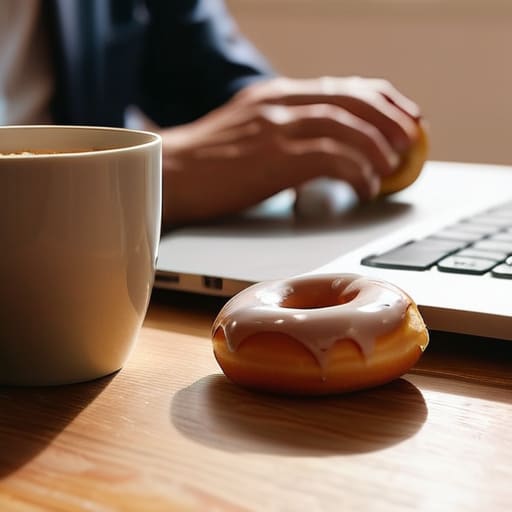
Most people think they’re just lazy or need more caffeine, but the truth is usually much more mechanical. When you hit that wall, you’re likely dealing with a predictable collision between your biology and your habits. One of the biggest post-lunch dip causes is simply the way we fuel ourselves. If you load up on heavy carbs or sugary processed stuff at noon, you’re essentially setting a trap for your own blood sugar. You get a spike, a crash, and suddenly your brain feels like it’s running on a dying battery.
It’s also about the clock, not just the food. Your circadian rhythm and energy levels are hardwired to dip slightly in the mid-afternoon; it’s a biological reality, not a personal failure. We try to fight it with more screen time or another espresso, but that’s just adding noise to a system that needs a reset. Instead of looking for a magic pill, we need to look at the input variables—what you’re eating and how you’re managing your light exposure—to stop the crash before it starts.
How Circadian Rhythm and Energy Levels Collide

Think of your body like an old analog synth I’m working on: it has its own internal clock, and if the timing is off, the whole output gets muddy. That’s essentially what’s happening when you feel that heavy fog settle in around 2 PM. It isn’t always about what you ate; it’s about the biological reality of how circadian rhythm and energy levels interact. We have these natural oscillations in our core body temperature and alertness that are hardwired into our DNA.
Even if you’ve got a perfect diet, your biology is programmed for a slight dip in vigilance during the mid-afternoon. It’s a built-in lull designed by evolution, not a personal failure of your willpower. When you try to fight this by slamming a third cup of coffee, you’re basically trying to force a signal through a blown fuse. Instead of fighting the tide, you have to understand that improving midday productivity starts with acknowledging these natural rhythms rather than trying to override them with sheer caffeine force.
Five ways to reset without the caffeine loop
- Stop the sugar spike. If your lunch is a mountain of refined carbs or a heavy pasta dish, you’re basically scheduling your own crash. Switch to high-protein, high-fat meals that keep your blood sugar steady instead of riding a roller coaster.
- Get some actual sunlight. I know, it sounds cliché, but sitting under fluorescent office lights is a recipe for a mental fog. Step outside for ten minutes. The natural light tells your brain it’s still daytime, helping to keep that circadian rhythm in check.
- Use the five-minute physical reset. When the brain fog hits, don’t try to power through it by staring harder at the monitor. Stand up, stretch, or walk around the block. Moving your body changes your physiology and forces a quick circulation boost.
- Hydrate like it’s your job. Most people think they’re tired when they’re actually just dehydrated. Keep a simple, reusable water bottle on your desk—not a fancy smart bottle, just something that works—and keep sipping throughout the afternoon.
- Manage your cognitive load. If you feel the slump coming on, don’t try to tackle your most complex, deep-work project. Use that low-energy window for “maintenance” tasks—clearing your inbox, organizing files, or basic admin—so you save your peak brainpower for when you’re actually sharp.
The Bottom Line: Stop fighting your biology
Stop treating the 3 PM slump like a personal failure; it’s often just your body reacting to a heavy lunch or a predictable circadian dip.
Ditch the third cup of coffee—it’s a temporary patch that usually leads to a worse crash later. Focus on movement instead.
Manage your environment, not just your willpower. If your workspace is dim and stagnant, your energy will be too.
Cutting Through the Slump

Look, we’ve covered a lot of ground, from the biological reality of your circadian rhythm to the way your lunch choices are sabotaging your focus. The takeaway isn’t that you need a complex new supplement regimen or a high-tech wearable to track your every move. It’s about recognizing that your energy isn’t a constant; it’s a system with inputs and outputs. If you’re hitting that wall, stop trying to power through with more caffeine or sugar. Instead, look at the variables you can actually control: your light exposure, your movement, and the heavy, carb-laden meals that turn your brain into mush. Simplify your approach and treat your energy like any other piece of hardware—it needs the right environment to function optimally.
At the end of the day, I want you to stop fighting against your own biology. We spend so much time trying to optimize our digital workflows and fine-tune our productivity apps, but we often neglect the physical foundation that makes all of that work possible. You aren’t a machine that can run at 100% capacity indefinitely without maintenance. By making a few small, pragmatic adjustments to how you handle your afternoons, you aren’t just beating fatigue; you’re building a more sustainable way to live. Stop overcomplicating the fix and just start moving. Your future, more focused self will thank you when the sun goes down.