
I was staring at a receipt the other night, trying to figure out how a single trip for milk, eggs, and some decent protein had somehow totaled eighty bucks, when it hit me: most “expert” advice on how to make a grocery budget is complete garbage. You don’t need a color-coded spreadsheet, a subscription to a meal-planning app, or a PhD in nutritional science to stop bleeding money at the supermarket. I’ve spent my career as an engineer stripping away unnecessary complexity to make systems work, and frankly, the way people approach food spending is massively over-engineered.
I’m not here to sell you on some complicated digital ecosystem that takes more time to manage than the actual shopping. Instead, I’m going to show you a few straightforward, field-tested methods that bridge the gap between your bank account and your pantry. We’re going to focus on the mechanical basics—inventory, planning, and hard limits—to build a system that actually holds up when you’re tired and hungry in the middle of an aisle. Let’s cut through the noise and get your spending back under control.
Table of Contents
Mastering Monthly Food Expense Tracking Without the Spreadsheet Headache

Look, I’ve spent enough time in systems engineering to know that if a tracking method is too complex, it’s going to fail the moment life gets messy. Most people try to track every single cent using a massive, color-coded spreadsheet, only to abandon it by week two because it feels like a second job. If you want actual results with monthly food expense tracking, you need to stop chasing perfection and start looking at the big picture.
Instead of logging every onion and head of lettuce, try the “envelope method” but for your bank account. Set a hard limit for your grocery spending each week and check your banking app once every few days—not every hour. This keeps you aware of the burn rate without the data entry fatigue. Pair this with some basic grocery list organization tips, like grouping items by aisle, so you aren’t wandering aimlessly through the store. When you shop with intent rather than impulse, the math starts working for you instead of against you. Keep it simple, keep it visible, and don’t let the tools become the burden.
Smart Grocery Shopping Habits to Protect Your Bank Account
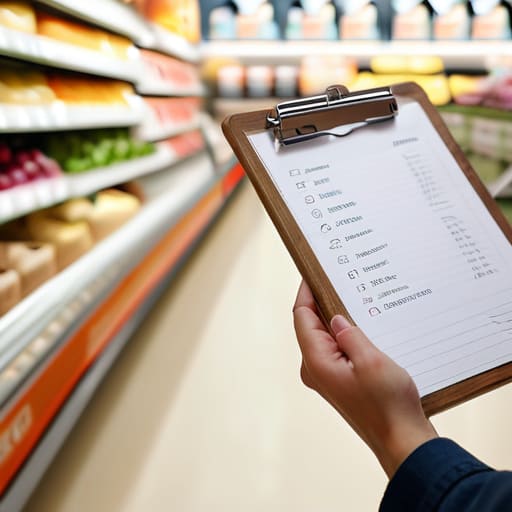
Look, the best way to protect your bank account isn’t found in a fancy app; it’s found in the aisles of the store. If you walk into a supermarket without a plan, you’ve already lost. I’ve spent years optimizing systems, and the most efficient one is simple: never shop hungry and never shop without a list. Use some basic grocery list organization tips—like grouping items by aisle—to keep you from wandering aimlessly. Wandering leads to impulse buys, and impulse buys are the silent killers of any decent budget.
Once you’re actually in the store, focus on the perimeter. The middle aisles are usually packed with processed stuff that costs a premium for convenience. I’m a big believer in meal planning for savings by looking at what you already have in your pantry before you even leave the house. If you have a bag of rice and some canned beans, build your week around that. It’s about reducing food waste and making sure every dollar you hand over actually turns into fuel for your body, not just more clutter in your cupboard.
Five Straightforward Tactics to Keep Your Food Costs from Spiraling
- Stop shopping when you’re hungry. It sounds like a cliché, but it’s basic biology. When your blood sugar is low, your brain stops looking for nutrition and starts looking for dopamine—which usually means expensive, processed junk that isn’t even on your list.
- Audit your pantry before you hit the store. I’ve seen people buy a second jar of cumin or a third bag of rice just because they didn’t take ten seconds to look in the cupboard. If you already own it, don’t pay for it again.
- Embrace the “Store Brand” reality. Most of the time, the generic version of staples like flour, salt, or canned beans is the exact same product as the name brand, just without the marketing budget. Save your money for the stuff where quality actually matters, like a good cut of meat or fresh produce.
- Plan for “Lazy Nights.” A budget fails when life gets messy. If you don’t have a backup plan for when you’re too tired to cook, you’ll end up ordering takeout, and that’s where your weekly budget goes to die. Keep a few frozen or easy-prep meals on hand for those exact moments.
- Stick to a hard cash limit if digital spending feels invisible. It’s easy to tap a phone or swipe a card without feeling the sting. If you’re really struggling, withdraw your weekly grocery budget in cash. When the envelope is empty, you’re done shopping. It’s a physical boundary that digital numbers just can’t replicate.
The Bottom Line: Keep It Simple and Stick to It
Stop chasing perfect data; tracking what you actually spend in a notebook is more effective than a complex spreadsheet you’ll never open.
Control the environment by shopping with a list and a hard cash limit to prevent impulse buys from sabotaging your progress.
Focus on systems, not willpower—build a routine around your food spending so it becomes a background process rather than a daily struggle.
Stop Overthinking and Start Doing

Look, at the end of the day, a grocery budget isn’t about deprivation or becoming a math expert; it’s about reclaiming control over where your hard-earned money is leaking. We’ve covered the essentials: ditch the complex spreadsheets that you’ll never actually update, keep a simple running list of what you actually eat, and stick to a plan when you’re actually walking through those sliding glass doors. If you can track your spending with a basic notebook and shop with a clear intent, you’ve already done more than most people. It’s about building a reliable system that works for your life, not a digital chore that adds more stress to your plate.
Don’t let the fear of getting it “perfect” keep you from getting started. You’re going to overspend on some weeks, and you’re going to buy things you don’t need—that’s just part of the process. The goal isn’t to be a robot; it’s to bridge the gap between your bank balance and your actual needs so you can stop worrying about the checkout total. Once you get these basic mechanics down, you’ll find that you have more breathing room for the things that actually matter when the screen goes dark. Now, put the phone down, grab a pen, and just start with one list.